OVERVIEW
For this design week game jam challenge, we were tasked with creating a table-top game based on an existing title. For our project, we developed Hardspace: Shipbreaker, The Tabletop Game. Pulling on the precise mechanical feel of the original, it's tense, time-based competitive puzzle game where players carefully remove pieces from a physical ship, earning cash from the scrap to pay off their skyrocketing debts.
DESIGN PROCESS
As the primary rulebook designer, I developed every iteration of the rules.
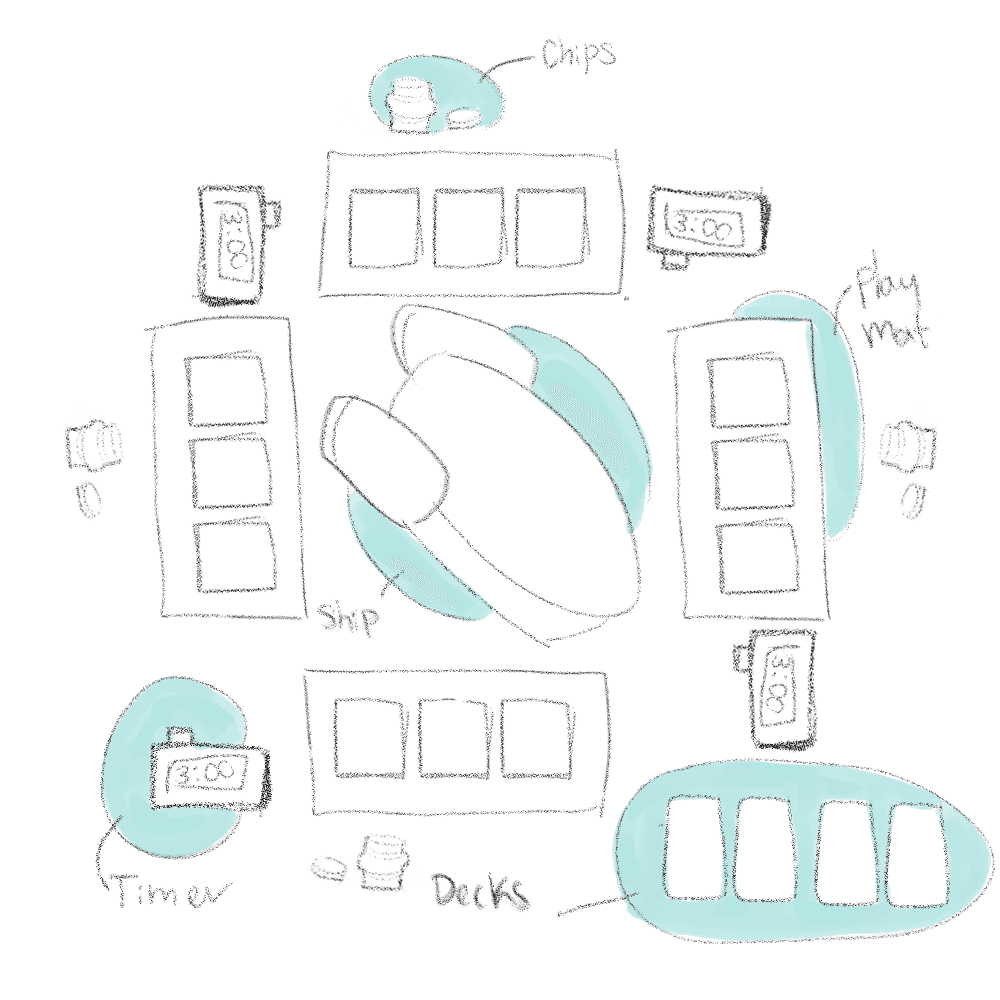
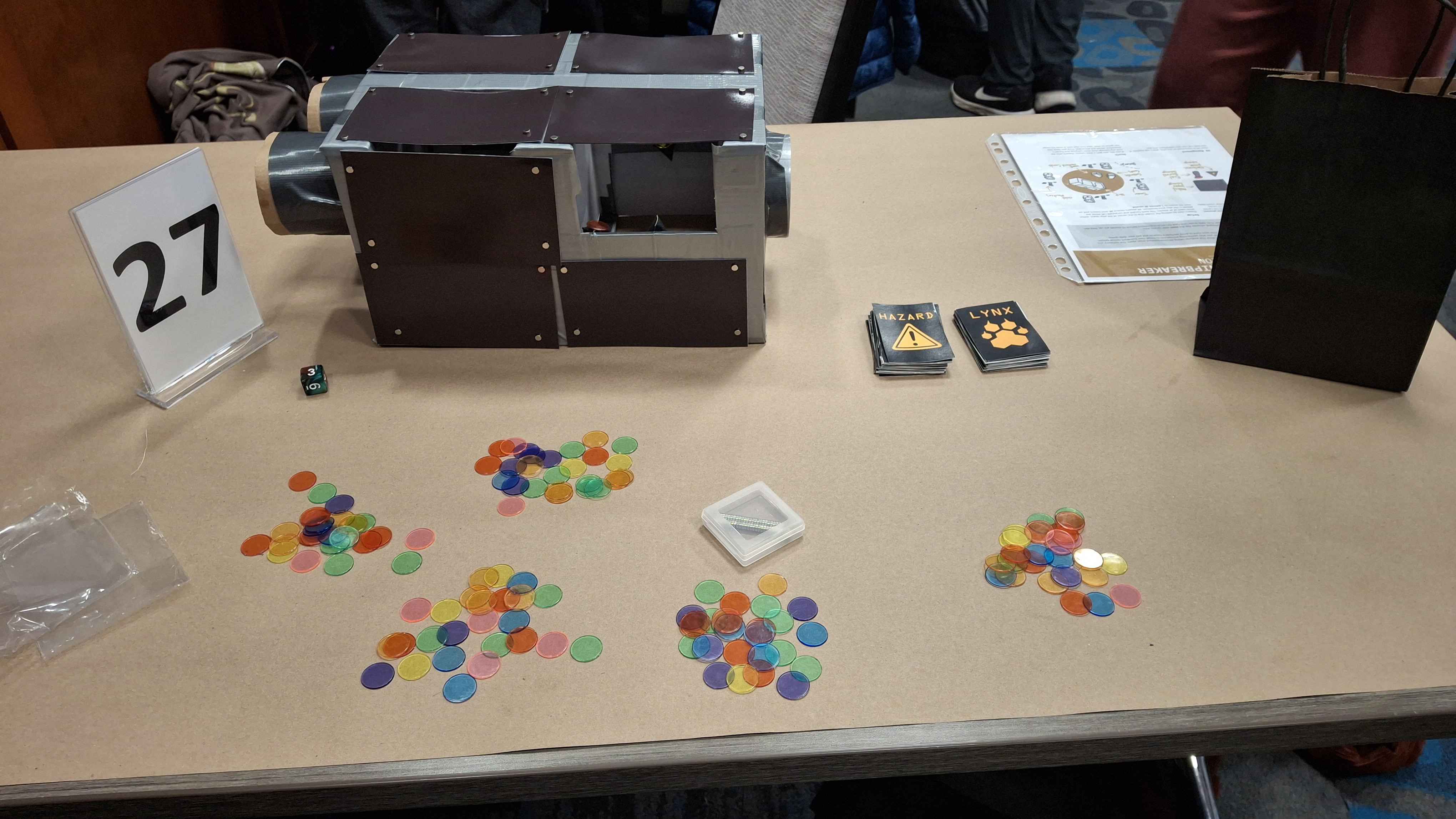
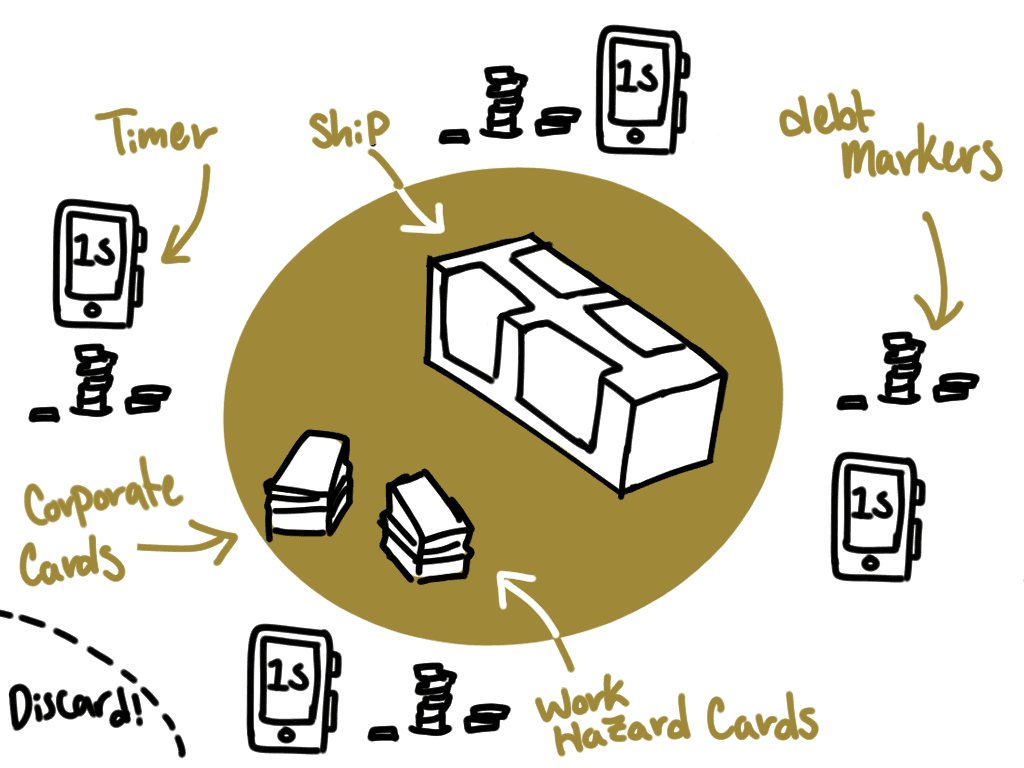
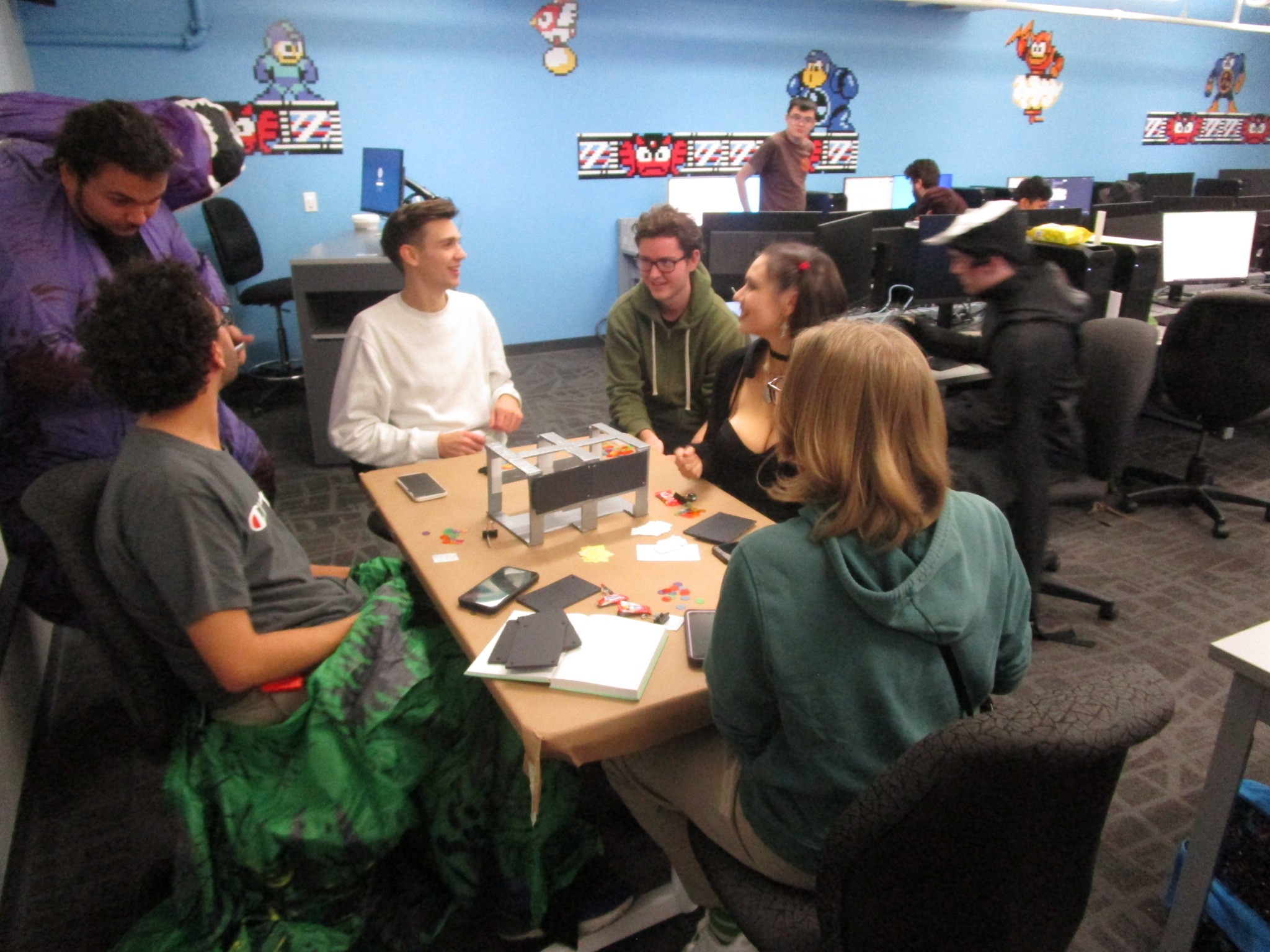
Early iterations of the rulebook had to make a lot of assumptions about what objects would look like, how the play space would be set up, and what resources we'd have.
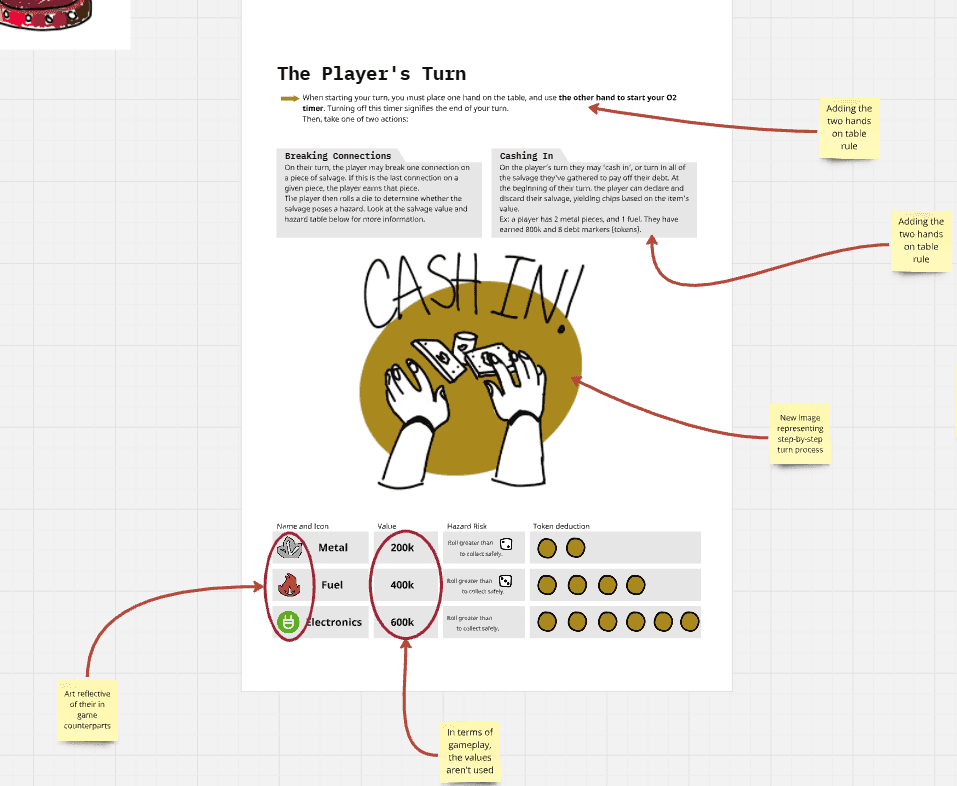
As the game evolved, It was important to continue to update the rulebook. One of the things I tried to address early were clear visuals and common language, to make the game very easy to pick up. Here I included a chart with lots of pictures instead of numbers, to make it both more enticing and accessible.
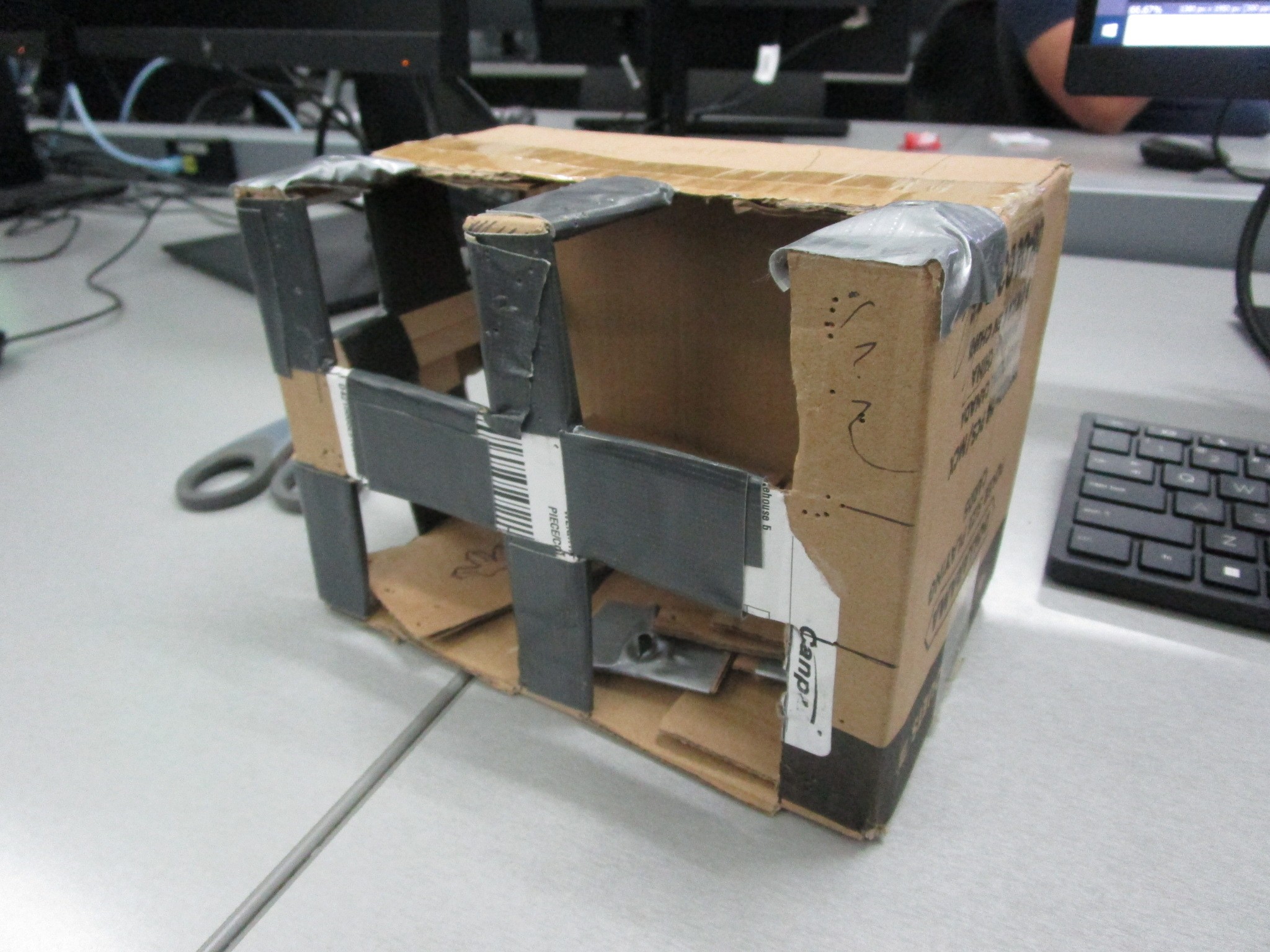
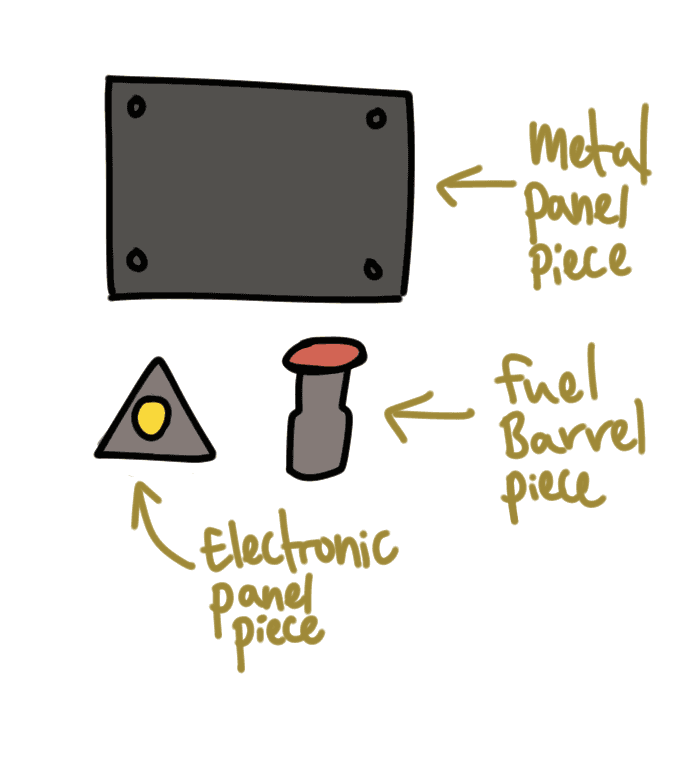
Being a physical game, it was important for us to pay attention to the physicality of the ship. For me, this meant my rulebook needed to include images that reflected the actual appearance of the model, not just what they were trying to represent, so that players could accurately determine what component was what.
I relied on colour and shape, rather than words or symbols, to communicate what each real-world object was. This helped make our game more universally accessible, even by people from different cultures (who might have different symbolic norms), and made our rulebook easier to navigate. Instead of looking for the right name, players could instead look for the picture that matches the object to reference its rules.